Prof. Amro Farid
“From Design Structure Matrix to Hetero-functional Graph Theory: A Story of Convergence to Systems-to-Systems”

Prof. Amro M. Farid is the Principal Systems Scientist at National Energy Analysis Centre at CSIRO – Australia’s National Science Agency. He is also a Visiting Scientist at MIT Mechanical Engineering, and CEO of Engineering Systems Analytics LLC. Dr. Amro M. Farid is an MIT and University of Cambridge (UK) educated systems engineering expert in the fields of energy, infrastructure, defense, manufacturing, chemical, automotive, and semiconductor sectors. He leads the Laboratory for Intelligent Integrated Networks of Engineering Systems (LIINES) and has authored over 165 peer-reviewed publications and 140 invited presentations in Smart Power Grids, Hydrogen-Energy-Water Nexus, Electrified Transportation Systems, Industrial Production & Supply Chain Energy Management, Smart Cities, Regions & Nations.
As an Environment and Greenhouse Gases Specialist, he designed and implemented Air Liquide’s Worldwide Environmental Management System and was the lead technical advocate for Air Liquide’s position on the EU Emissions Trading Scheme. In 2010, he began his academic career as a visiting scholar at the MIT Technology Development Program and the Masdar Institute of Science and Technology (UAE). He is known outside of the classroom as having founded Engineering Systems Analytics LLC, which is a consultancy startup delivering automation, operations research, and big data analytics solutions to the domains of smart power grids, water distribution, transportation, manufacturing, and sustainable health. In 2021, he became a Fulbright Future Scholar to investigate the energy-water-hydrogen nexus in Australia.
Dr. Farid is well known for leveraging his expertise in complex network theory, large-scale computational simulations, and operations research not only in his academic research but also with industry and the public. He has made active contributions to the MIT-Masdar Institute Collaborative Initiative, the MIT Future of the Electricity Grid Study, and the IEEE Control System Society Smart Grid Vision. He currently serves as President-Elect of the INCOSE New England Chapter, Chair of the IEEE Smart Cities R&D Technical Activities Committee, and Co-Chair of the IEEE Systems, Man & Cybernetics (SMC) Technical Committee on Intelligent Industrial Systems. He is a fellow of the ASME, senior member of the IEEE, and a member of INCOSE.
Thomas (Tom) A. McDermott
“Systems Engineering in the Age of Artificial Intelligence”
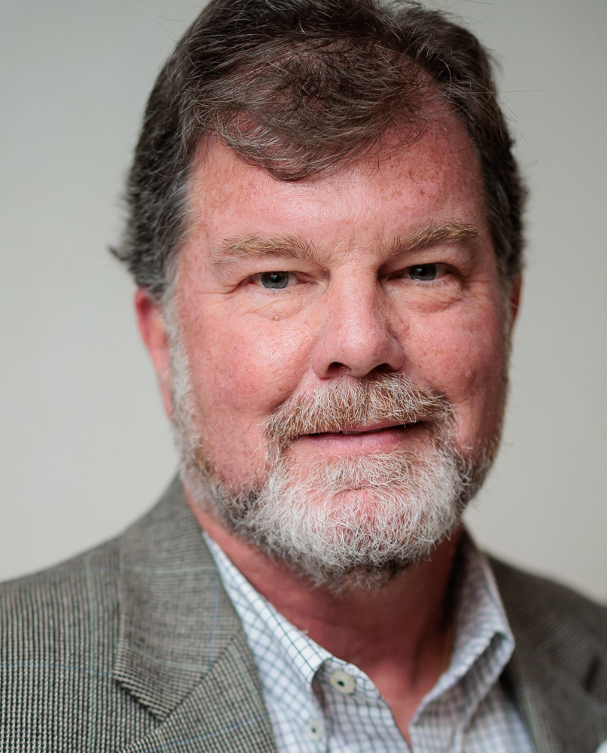
Tom McDermott is a faculty member in the Department of Systems and Enterprises in the Schaefer School of Engineering at Stevens Institute of Technology in Hoboken, NJ. With the SERC he develops new research strategies and is leading research on digital transformation, education, security, and artificial intelligence applications. He previously held roles as Faculty and Director of Research at Georgia Tech Research Institute and as Director and Integrated Product Team Manager for the F-22 Raptor Avionics team at Lockheed Martin.
Mr. McDermott teaches system architecture, systems and critical thinking, and leadership. He provides executive level consulting as a systems engineering and organizational strategy expert. He is a fellow of the International Council on Systems Engineering (INCOSE) and recently completed 3 years as INCOSE Director of Strategic Integration.
Garrett Thurston
“Engineering for Alignment: Structuring Complexity Across the Digital Enterprise”
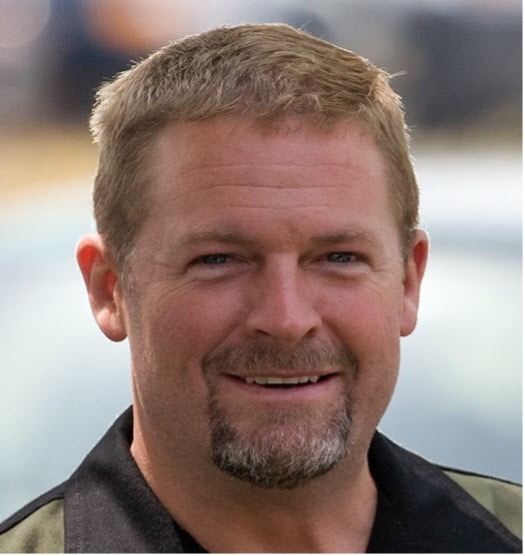
Garrett Thurston´s academic background includes a B.S., M.S. in Engineering, and a Doctorate—with studies spanning business, intelligence, and security policy. He holds four patents in advanced materials for high-performance applications, including hypersonic systems.
Garrett has contributed to landmark defense and commercial programs such as NASP, RATLRS, STUAS, X-47B, the Boeing 787, and counter-threat detection systems. He played a foundational role in Dassault Systèmes’ acquisition of No Magic, helping anchor its model-based systems engineering capabilities.
Sponsors and Partners








 The 28th International DSM Conference